

The retail landscape is currently undergoing a monumental shift, driven by evolving consumer expectations and rapid technological advancements. In this volatile environment, the traditional models of human resources are proving insufficient to maintain a competitive edge. Forward-thinking organizations are now fundamentally re-engineering retail hr to transition from a reactive, administrative function into a proactive, strategic powerhouse essential for operational agility and sustainable growth.
Streamlining Workforce Management
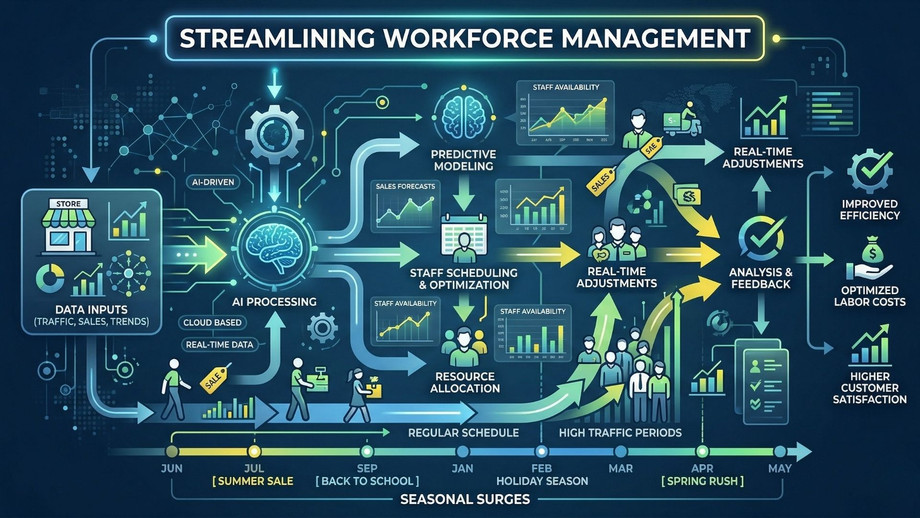
The primary challenge in retail is the dramatic, often unpredictable, fluctuation in labor demand. Seasonal peaks, promotional events, and localized foot traffic surges require a workforce that can scale instantly without compromising customer service. Modern HR tech addresses this by deploying advanced, AI-driven scheduling tools that analyze historical sales data, traffic patterns, and even weather forecasts to predict optimal staffing levels with startling accuracy. This optimization reduces costly overstaffing during quiet periods while ensuring enough hands are on deck when the floor is busy. Furthermore, for retailers managing large, distributed teams, the use of computer monitoring software can provide invaluable insight into remote support or back-office productivity, helping identify bottlenecks in processes that impact store-level execution. This integration allows HR to make data-backed decisions that balance lean operations with exceptional service delivery.
Modern Training: Gamification and VR
Employee turnover in retail is high, making rapid, effective onboarding essential. The old method of shadowing or static video modules is too slow and often fails to engage digital-native workers. Modern HR functions are adopting gamification using point systems, leaderboards, and badges to turn mandatory compliance and product training into interactive challenges. This boosts information retention and creates healthy competition. Even more impactful is the deployment of Virtual Reality (VR). With a headset, a new hire can "practice" de-escalating an angry customer or managing a massive Black Friday rush without any real-world risk. The validated impact includes shorter time-to-productivity and improved confidence among floor staff.
Data-Driven Performance Reviews
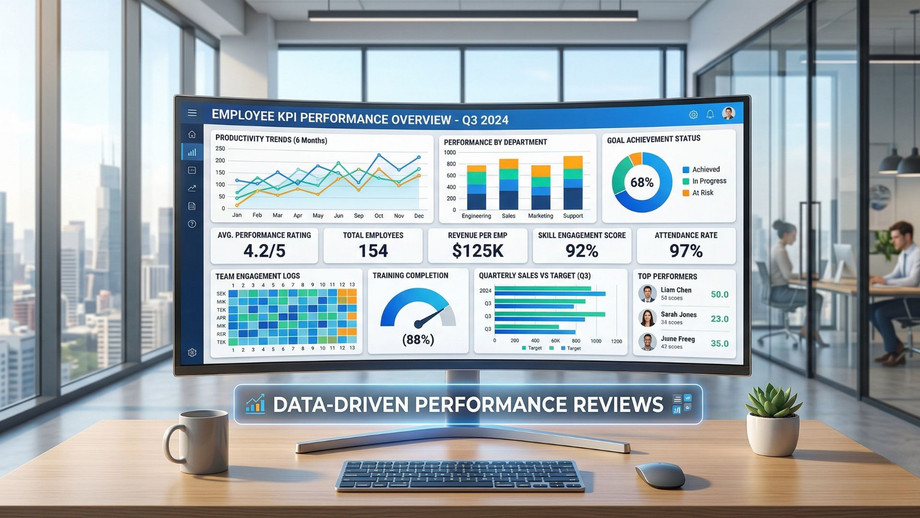
The annual performance review is dead, particularly in retail where speed matters. Taking a snapshot of an employee's work once a year is subjective, prone to recency bias, and utterly unhelpful for real-time course correction. Digital HR systems provide continuous, data-driven feedback loops. KPIs like sales-per-hour, attachment rates, customer satisfaction scores (CSAT), and even attendance are tracked automatically and presented in intuitive dashboards. Managers can spot top performers instantly and, crucially, identify those struggling early enough to offer targeted coaching. This proactive intervention transforms reviews from a punitive administrative hurdle into a dynamic professional development tool.
Tech-Enabled Employee Retention
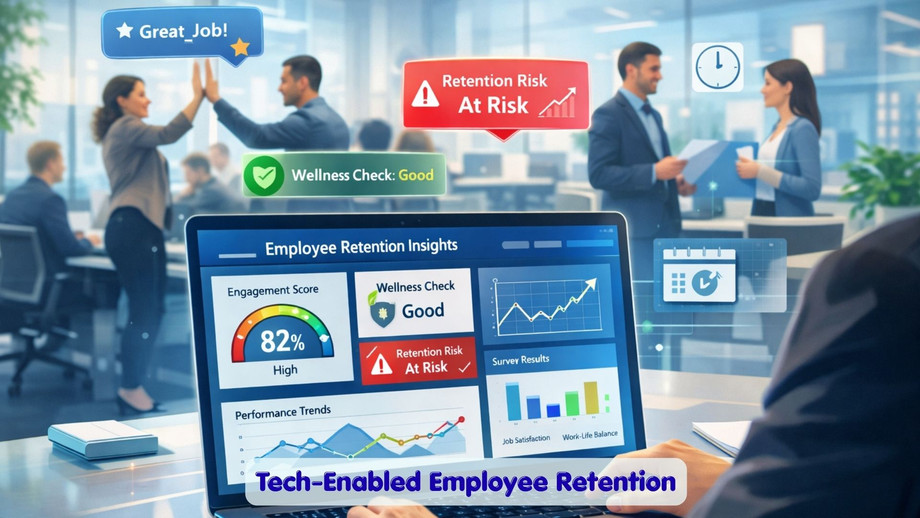
Given the industry’s notoriously high turnover, retention is a massive cost center. Technology helps here by automating wellness checks and pulse surveys to measure engagement in real-time. But understanding why employees stay is just as critical as understanding why they leave. Advanced retention platforms analyze data from various sources including engagement surveys, performance history, and even anonymized communications (where permitted) to flag employees who may be at risk of quiet quitting or actively looking for new opportunities. This allows HR and managers to stage timely interventions, whether through personalized recognition, a shift adjustment, or a retention bonus, significantly reducing costly voluntary turnover.
Retaining Talent: A Strategic Imperment
A core component of any effective retention strategy involves deep-diving into the reasons departures occur, which means redefining the exit interview meaning within the organization. Traditionally, these were hasty, check-the-box administrative procedures on an employee’s final day. The modern approach, however, treats the exit interview as a goldmine of strategic intelligence. When conducted effectively and digitally, the data collected reveals systemic issues, such as ineffective management practices, deficient training programs, or a disconnect between corporate culture and store reality. By analyzing this candid feedback in aggregate, HR can identify trends and implement changes that directly address the root causes of employee dissatisfaction, thereby fortifying overall retention efforts.
Building Agile Retail Cultures
The ultimate objective of integrating technology into HR processes is to foster a more agile, resilient retail culture. An agile culture is one that can pivot instantly in response to disruption, whether it is a new market competitor or a sudden global supply chain issue. Technology provides the transparency and speed required for this agility. Internal communication platforms ensure corporate directives reach the floor immediately, and peer-to-peer recognition systems allow top performers to be celebrated instantly, boosting morale. By removing administrative friction and leveraging data for every personnel decision, HR can build a workforce that is not only efficient but also highly engaged and deeply aligned with the company’s strategic goals.
The Future of Retail HR
The digital transformation of retail human resources is not merely about replacing paper forms with tablets; it is a fundamental rethinking of how people connect with profit. By leveraging advanced data analytics, immersive training technologies, and AI-driven intelligence, organizations can optimize their workforce, improve employee engagement, and enhance operational resilience. Retailers who resist this evolution will continue to struggle with high turnover and operational rigidities. Conversely, those who embrace these innovations will build the agile, motivated teams necessary to succeed in the dynamic, customer-centric future of the industry. Redefining retail hr is no longer an option; it is a critical competitive necessity.
FAQs
Q: How can AI help in retail scheduling?
A: AI algorithms analyze historical sales data, local events, and weather patterns to generate highly accurate staffing forecasts, ensuring optimal coverage while significantly reducing instances of costly overstaffing or understaffing.
Q: Why is VR effective for retail training?
A: VR provides safe, immersive simulations where employees practice complex scenarios like de-escalating customer conflicts or managing peak sales rushes. This validated experiential learning improves confidence and reduces time-to-productivity for new hires.
Q: Is modern HR tech expensive for small retailers?
A: While enterprise systems have high entry costs, many scalable, cloud-based HR and monitoring platforms are available. These tools offer essential features like scheduling and performance tracking at a lower cost, delivering a substantial ROI.